He Built REI and Conquered Everest: Remembering Army Veteran Jim Whittaker
COMMENT
SHARE

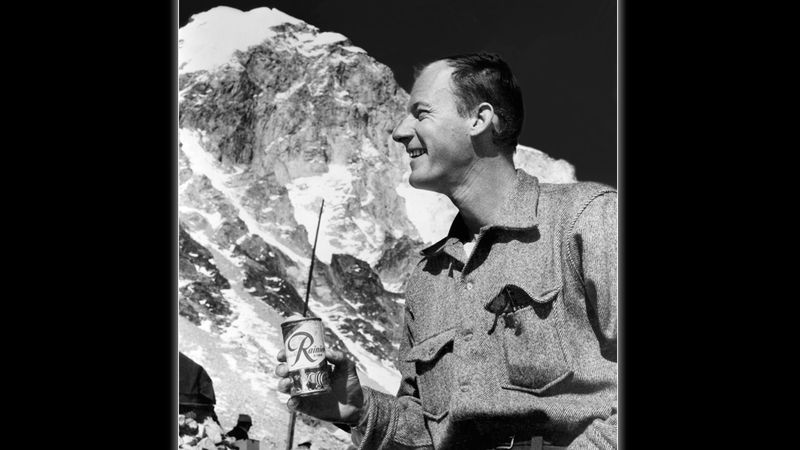
America lost one of its great outdoorsmen on April 7, 2026, when James Warren "Big Jim" Whittaker passed away peacefully at his home in Port Townsend, Washington. He was 97. Whittaker was many things over the course of a remarkable life: soldier, mountain guide, CEO, conservationist, and friend to presidents and senators. Most Americans know him as the first American to stand on the summit of Mount Everest, and for his constant advocacy for preserving the wild places.
As an avid hiker who has spent considerable time in the Pacific Northwest and an REI member since the mid-90s, I feel a personal kinship with Jim Whittaker. His adventures still inspire, and the legacy of national parks and the outdoor co-op he led still help provide access for Americans to those wild places.
The towering peaks of the Cascades and the Olympic range that frame the Pacific coast are not just scenery to people like Whittaker; they were a calling. He answered it in ways that leave a legacy for millions who follow.
A Boy Scout, a Soldier, a Summiteer
Whittaker was born on February 10, 1929, in Seattle's Arbor Heights neighborhood, alongside his twin brother Lou. The brothers discovered climbing as teenagers through the Boy Scouts and the Mountaineers, a Seattle-based outdoor community whose mission is to teach skills to explore the outdoors safely and responsibly. By 16, the brothers had summited Mount Olympus, the highest peak in Washington's Olympic Mountains. They became guides on Mount Rainier and took over management of the national park's guide service in 1949.
When the Korean War broke out, both brothers were drafted into the Army. Initially assigned to a Signal Corps detachment in California, their climbing credentials quickly earned them a transfer to the Army's Mountain and Cold Weather Training Command at Camp Hale, Colorado, the original base of the 10th Mountain Division, before finding their home at Fort Drum, New York.
In January 1953, Jim and Lou arrived at Camp Hale. Their job was to train an elite group of Soldiers to execute wartime missions in unforgiving alpine conditions. Using the skills they learned with The Mountaineers and honed as mountain guides on Mount Rainier, Jim and Lou trained the soldiers in skiing, climbing, mountain maneuvers, and bivouacs. They also taught cold-weather survival skills, snowshoeing and skiing techniques, and ice climbing at Wind River, Wyoming.
Both brothers received honorable discharges in 1954, and when the 10th Mountain Division was reactivated in 1985, both were named honorary members. It was a fitting tribute. The Whittakers didn't just train soldiers - they helped shape the Army's mountain warfare doctrine at one of the most demanding high-altitude training installations in American military history.
REI: From One Employee to a Movement
A year after leaving the Army, Whittaker got a call from Lloyd Anderson, the co-founder of a small Seattle outdoor cooperative with about 600 members.
Whittaker became REI's first full-time paid employee in 1955, a one-man operation handling everything from stocking shelves to making bank deposits. He stayed for a quarter century. During his tenure as president and CEO from 1971 to 1979, the co-op's membership grew from roughly 250,000 to more than 900,000.
Every hiker, cyclist, and trail runner who has ever walked into an REI store owes something to Whittaker. He turned a regional cooperative into a national institution and made the outdoors accessible to millions of Americans who otherwise might never have laced up a pair of trail boots.
The Top of the World
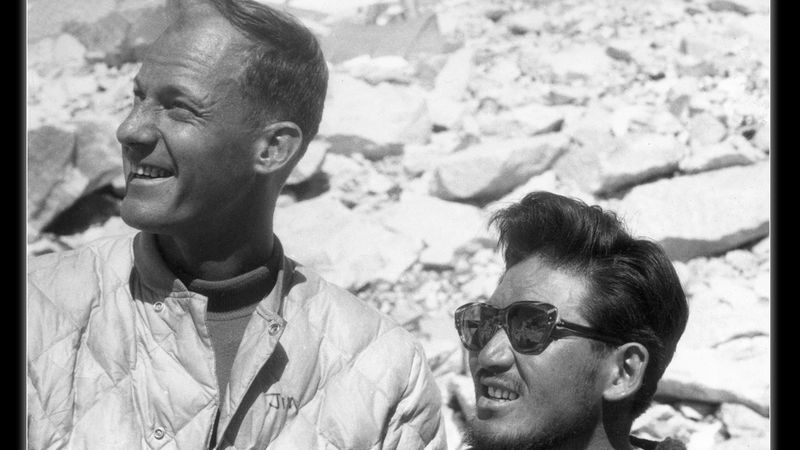
On May 1, 1963, Jim Whittaker and Sherpa Nawang Gombu - nephew of Tenzing Norgay, who had first summited with Edmund Hillary a decade earlier - reached the top of Everest as part of the American Mount Everest Expedition led by Norman Dyhrenfurth. The expedition earned Whittaker and his teammates the National Geographic Society's Hubbard Medal, which President Kennedy presented at the White House. Upon returning home, Seattle threw a parade in his honor.
The climb also sparked a friendship with the Kennedy family that would define much of the decade for Whittaker. In 1965, Whittaker guided Senator Robert F. Kennedy to the summit of Mount Kennedy in Canada's Yukon Territory, a previously unclimbed peak named for President Kennedy. Whittaker worked on RFK's 1968 presidential campaign and was at the senator's bedside when he died after being shot in Los Angeles.
Whittaker's Legacy: Conservation and Reconciliation
His twin brother, Lou, co-founded Rainier Mountaineering, Inc. in 1969, today run by the second generation of Whittakers and is still the biggest outfitter guiding clients up Washington's tallest peak. Meanwhile, Jim summited Mount Rainier more than 100 times during his own career.
His congressional testimony helped establish North Cascades National Park, Redwood National Park, and the Pasayten Wilderness. These places are still wild today in part because Jim Whittaker chose to fight for them.
As the Cold War was winding down, Jim Whittaker saw an opportunity to foster greater cooperation. In 1990, Whittaker organized the Mount Everest International Peace Climb, bringing together climbers from the United States, the Soviet Union, and China. Twenty climbers reached the summit over four days, and the team also hauled more than two tons of garbage off the mountain that earlier expeditions had left behind. The expedition was vintage Whittaker: ambitious, principled, and built on the belief that mountains could bring people together rather than divide them.
His memoir, A Life on the Edge: Memoirs of Everest and Beyond, captures it well. As he once reflected:
“I have discovered that individual and communal learning takes place when we find ourselves at the edge of our comfort zone. Being out on the edge is where we learn and grow the most.”
In the Army, Jim Whittaker served his country at Camp Hale in the cold thin air of the Colorado Rockies, then spent the next seven decades as a Veteran proving what soldiers who love the mountains already know: the high ground demands something of you, and it gives something back. He answered that call 97 years of living at a time.
He is survived by his wife of 52 years, Dianne Roberts; sons Bobby, Joss, and Leif Whittaker; three grandchildren; and one great-grandchild. He was preceded in death by two sons, Carl and Scott.
Rest in peace, Big Jim.
Continue Reading

$50 Billion Is Hitting Rural Healthcare: Here’s Why Veterans May See the Impact First
Veteran Benefits
Military Terminal Leave: 13 FAQs and Expert Answers
Career

How to Apply for CHAMPVA in 2026: No Backlogs, Faster Approvals
Veteran Benefits
Join the Conversation

BY MICKEY ADDISON
Military Affairs Analyst at VeteranLife
Air Force Veteran
Mickey Addison is a retired U.S. Air Force colonel and former defense consultant with over 30 years of experience leading operational, engineering, and joint organizations. After military service, he advised senior Department of Defense leaders on strategy, readiness, and infrastructure. In additi...
Credentials
Expertise
Mickey Addison is a retired U.S. Air Force colonel and former defense consultant with over 30 years of experience leading operational, engineering, and joint organizations. After military service, he advised senior Department of Defense leaders on strategy, readiness, and infrastructure. In additi...