The Korean War's Uneven Integration: What the Record Says and What Veterans Remember

The Korean War is often described as the “Forgotten War” in American and global history. July 27, 2026 marks the 73rd anniversary of the Armistice Agreement, which ended hostilities, though notably there was never a peace treaty officially ending the conflict. 2026 also marks the 250th anniversary of the United States - a celebration which calls upon citizens to honor the democratic principles that stand as the foundation for the nation. In that context, it’s important now more than ever to remember the impacts of the Korean War.
One of the most significant impacts of the Korean War was that it put a racially integrated U.S. military to the test for the first time. After a number of so-called “experiments” in integration during World War II, President Truman made integration of the military official policy with Executive Order 9981 on July 26, 1948.
This executive order did not, of course, lead to the immediate desegregation of the U.S. Armed Forces. In fact, there was considerable resistance to desegregation, especially from the U.S. Army and the Marine Corps.
Ultimately, it was the Korean War that effectively forced their hand, resulting in the true beginnings of an integrated American fighting force. However, the road to true integration was long and bumpy, with many stops and starts, despite pressure from the war.
Despite facing continued segregation and discrimination in the military, hundreds of thousands of African Americans served honorably during the Korean War. Acknowledging their service, the struggles they overcame, and the impact of their service reveals one reason it is imperative that we strive to remember the Korean War.
The Korean War
Most people know of the divided occupation of Germany amongst the Allied Powers after World War II, but fewer people are aware of the similar occupation of Korea and how this led to the outbreak of the Korean War.
Prior to World War II, Korea had been under Japanese rule for 35 years. Following World War II, it was decided that the United States and the Soviet Union would share occupation of the former Japanese colony.
The Korean Peninsula was divided along the infamous 38th Parallel, with the Soviet Union occupying the Democratic People’s Republic of Korea (North Korea) and the United States occupying the Republic of Korea (South Korea). Both nations were officially recognized as independent states in 1946.
With the support of the Soviet Union, North Korea invaded South Korea in June 1950, causing the recently formed United Nations to step in on behalf of South Korea, with the United States acting as the principal participant country.
At first, it seemed this would be a quick conflict - by late fall of 1950, UN forces had effectively pushed back North Korean forces, crossing the 38th Parallel. However, the People’s Republic of China intervened on behalf of North Korea with Soviet support, leading to a stalemate along the 38th Parallel by mid-1951. After two years of continued, brutal fighting, an armistice was signed in July 1953.
Over just three years, more than 1.7 million Americans served in the Korean War. Of those, more than 36,000 were killed or missing in action and roughly 103,000 were wounded. This is by no means an insignificant number, yet the service of these brave Americans is often forgotten and overshadowed by its predecessor, World War II, and the conflict that followed in Vietnam. But why?
Why Is the Korean War “Forgotten?”
Compared to World War II, the Korean War was a shorter war with far fewer troops mobilized. Additionally, scholars argue that the Korean War was easier for the American people to ignore even at the time, because it didn’t result in the same home-front sacrifices (like rationing) that they experienced during World War II.
Dr. Jongwoo Han, President of the Korean War Legacy Foundation, also argues that the location of the War had a significant impact. A vast majority of Americans had direct ties to Europe and much more knowledge about the countries impacted by World War II. In comparison, Korea was a relative unknown to most Americans.
Dr. Han has interviewed more than 1,600 Korean War Veterans from every UN country that was involved, and found that before serving in the war, most knew nothing about Korea. In fact, “99.99% said no, they were not able to locate the Korean peninsula on a world map.”
Dr. Han also explains that in his experience, many Veterans wanted to forget the war because it had not really ended when they left. With no formal peace treaty, they were not returning home with the same sense of victory that their World War II counterparts had.
While there are many similarities between the Korean War and the Vietnam War, both being Cold War proxy wars fought in unfamiliar parts of the world, the Vietnam War is much more often remembered and discussed. While again, the length of the conflict and number of troops mobilized play a part, Dr. Han argues that generational differences are a key distinguishing factor.
“American soldiers who were in the Korean War are the last of the Silent Generation. The main characteristic of this generation is that they don’t talk about it. They were very faithful, responsible American citizens, but they are silent. They just did it because the American government called for it, and they were very patriotic. They were just doing what they were called upon to do,” he said.
By comparison, the Vietnam era was experienced by an entirely different generation of American youth embracing individualism and nonconformity, resulting in large-scale anti-war protests that made the Vietnam War extremely present in the lives of American civilians.

“Forgotten Soldiers from a Forgotten War”
Of the many reasons we should remember the Korean War, one of the most important is that the Korean War brought on the true desegregation of the U.S. Armed Forces. Of the 1.7 million Americans who served in the Korean War, roughly 600,000 were African American men and women. This is an even higher rate of service than their white counterparts, considering African American service members made up 35% of the American fighting force but only 10% of the U.S. population in 1950.
Dr. Eliot Pope, a scholar of African American history and the Korean War, calls these African American servicemembers “ the forgotten soldiers of the Forgotten War.”
In both the official historical record and public memory, their service is consistently overlooked and misunderstood. Furthermore, their experience of racism and discrimination in the U.S. military is often disregarded or oversimplified.
The Slow Desegregation of the U.S. Military
African Americans have served in every major conflict in U.S. history beginning with the American Revolution. In most cases, they served in segregated units, were often limited to menial service roles, and were unable to serve as officers.
World War II saw the first so-called “experiments” in integration for the Army, Navy, and Coast Guard, though the Marine Corps did not make any attempts.
Following the war, the Navy and the newly established Air Force both set goals of desegregation, but did not make any major strides or commitments. Meanwhile, the Army recommitted to segregation, and the Marine Corps remained staunchly segregated. All branches maintained strict population-based quotas, limiting the number of African Americans who could serve.
Multiple African American organizations, like the NAACP, put pressure on President Truman to address the inherent inequalities in this system, and on July 26, 1948, issued Executive Order 9981. The order stated:
“It is hereby declared to be the policy of the President that there shall be equality of treatment and opportunity for all persons in the armed services without regard to race, color, religion, or national origin. This policy shall be put into effect as rapidly as possible, having due regard to the time required to effectuate any necessary changes without impairing efficiency or morale.”
It’s important to point out that this order did not explicitly call for desegregation, though this is implied, and also did not establish or enforce any legitimate timeline for desegregation to occur.
As war broke out in Korea two years later, the Executive Order had not been widely enforced. In fact, many leaders in the U.S. Army and Marine Corps, like General MacArthur, still argued that segregation was actually necessary for overall efficiency, despite numerous studies contradicting that opinion.
For the majority of the Korean War, the Navy and Air Force were largely desegregated, while the Army had a mix of segregated and desegregated units, and the Marine Corps was completely segregated. These services only began to integrate fully when increasing manpower needs during the Korean War made it explicitly necessary to do so.
The Marine Corps officially changed its policy in December 1951, desegregating all units. By May 1952, U.S. Army forces in the Pacific were also desegregated (though the process took longer in Europe, and segregation continued in the Army National Guard in my states).
However, it’s worth noting that across the armed forces, racism persisted with many Black servicemembers facing racism off-base, especially in southern communities, as well as within the military, impacting things like promotion potential and type of discharge or separation.
The 24th Infantry as a Case Study for the African American Experience
The Army’s 24th Infantry is often referenced as a case study for the African American experience in the Korean War, for worse and for better. The 24th Infantry Regiment was an all-Black regiment, whose soldiers were some of the first to arrive in Korea after the outbreak of the war.
Though it’s often overlooked in favor of recognizing the strategically more important Battle at Inchon, the 24th Infantry Regiment’s capture of Yechon in July 1950 technically marked the first U.S. ground victory in the Korean War.
However, despite its early success, the 24th faced multiple challenges and often struggled over the following year before it was officially disbanded in October 1951. At the time, and in much historical writing about the 24th since, the regiment’s “failure” was blamed on the men’s incompetence.
Furthermore, the perceived incompetence of the 24th Infantry Regiment was often used to justify opinions about the general potential and competence of African American servicemembers as a whole.
However, Dr. Otis Eliot Pope Jr., historian and author of Forgotten Struggles: African-Americans Confront Racism During the Korean War Era, has made the case this is a key point history gets wrong on multiple fronts.
Through his research and interviews of Veterans of the 24th Infantry Division, Dr. Pope found that the real problem preventing the 24th from continued success was institutional racism.
The 24th Regiment received inferior and outdated weapons that often didn’t work. They did not receive proper clothing for the notoriously harsh weather conditions in North Korea. They served longer on the front lines without periods of rest than White units. At times these conditions were legitimately inhumane.
According to Dr. Pope,
“It was really blatant that the U.S. military was not giving them the necessary support to make sure that the 24th Infantry was successful. The U.S. military didn't need to disband the 24th Infantry, and they did serve honorably… [despite] the U.S. military not getting them the necessary equipment and supplies.”
One Veteran interviewed by Dr. Pope, James Williams, even described how he directly witnessed the disparity in supplies when he was rotated to an integrated unit. Compared to the 24th, that unit had better clothing and much newer weapons.
However, while the 24th may not have needed to be disbanded, the integration of Army forces was necessary and important, not only to meet the military’s needs for manpower, but also for the long-term success of desegregation on the homefront.
In Dr. Pope’s opinion, the integration of military units likely helped to break down prejudice.
“The enemy doesn’t discriminate, right? North Korean and Chinese soldiers were charging American lines; they didn’t look to see if they were shooting at a Black or White soldier,” he explained.
He explained further,
“I think that African American soldiers, but also especially White soldiers, came to the realization that if they wanted to get out of this alive, they needed each other.”
Black Prisoners of War
Another interesting aspect of the war in which African American troops had a unique experience was as Prisoners of War. In his book, Twice Forgotten, historian David P. Cline explains how Chinese Prisoner of War camps were purposefully segregated.
African American servicemembers were subjected to classes in American history that focused on the struggles African Americans had faced and continued to face. Enemy forces tried to convince them to turn their backs on their country, attempting to exacerbate existing racial tensions.
The fact that many of these African American Prisoners of War remained devoted to their country in spite of these pressures and that there was no mass defection amongst them speaks to the honor and valor of Black servicemembers.
This commitment is even more impressive when taking into account that they were fighting to protect the democratic freedoms of South Koreans while being denied those same freedoms at home.

African American Veterans and the Civil Rights Movement
Veterans like John B. Jackson, Jr., describe the inherent hypocrisy of serving in the Korean War: “They ask, why are you going to Korea? I’m going to fight for democracy, but then I thought, ‘Jack, you don’t have democracy in the United States.’”
Despite being glad that he was able to help the South Korean people through his service, there was definite disappointment in returning to a segregated United States where he was barred from accessing many of the benefits of democracy.
The honorable service of African American servicemembers like John B. Jackson, Jr. undoubtedly helped secure the democratic freedoms they were owed. While some Korean War Veterans did go on to become Civil Rights leaders, many in the Civil Rights Movement were wary of involving Veterans, believing they’d be prone to respond with violence at protests when faced with aggression by police.
However, David P. Cline argued that even those who were not directly involved at marches and protests still played an important role in securing Civil Rights.
As he explains,
“Whether or not veterans see themselves as having been actively involved in the pursuit of civil rights, they were, without question. To stand up in uniform as an African American man or woman during a time when basic human rights were denied them was undeniably a form of activism and an act of great dignity.”
African American Heroes of the Korean War
Each of the servicemembers honored below had a unique story to tell of their military experience. Where possible, a link is provided so that you may listen to or read that Veteran’s story in their own words.
Dr. Otis Eliot Pope, Jr., reiterated the importance of honoring Black Korean War Veterans and listening to their stories:
“By marginalizing and downplaying and diminishing certain voices within the Korean War, you take away from the complexity of it, and how important the war was to America, to American foreign policy, to the Civil Rights Movement, and to the integration of the US military.”
Dr. Jongwoo Han echoed this sentiment, pointing out that despite the lack of a peace treaty, the prosperity and democracy present in South Korea today signal a long-term victory and are another important legacy of African Americans’ Korean War service.
These Veterans’ stories were collected by the Korean War Legacy Foundation, an organization that has conducted over 1,600 interviews with Veterans representing all 22 UN countries involved in the Korean War. In addition to interviewing Veterans, their team collaborates with local educators to create country-specific curriculum books and host teachers' conferences to increase the quality of education about the Korean War.
Those featured here represent a tiny portion of the 600,000 African Americans who served in the U.S. Armed Forces during the Korean War. Check out these other African American Veterans featured in the Korean War Legacy Foundation’s interview collection:
- John H. Jackson, who fought in the infamous Battle at the Chosin Reservoir, was evacuated, and then later put back on the front lines in other major battles
- Maurice L. Adams, one of two Black officers in his Army battalion
- John E. Gragg, an Army Infantryman who discusses the slow integration process
- John B. Jackson, Jr., a gunner with the 23rd Infantry Regiment
- Wilbur Barnes, an Army artilleryman who was the only Black Sergeant in his unit
- Joe H. Ager, who served as a transport driver in a segregated company during the Korean War
- Curtis Lewis, a Korean War-era Veteran who served in the Air Force stateside during the war
- Lee A. Smith, who served as a fire fighter with the 525 Fire Fighting Detachment in Incheon, South Korea
- Beverly Lawrence Dunjill, one of the youngest Tuskegee Airmen, who went on to serve as a fighter jet pilot during the Korean War
- Walter Dowdy, Jr., a radio operator in the U.S. Army during the Korean War
- James Burrows, an Army Veteran who tells the story of capturing a Chinese soldier who’d snuck behind the line
- Charles Earnest Berry, a 22-year Veteran of the U.S. Army who served in World War II, Korea, and Vietnam, witnessing the full extent of the long road to military integration
- Willie Bacon, Sr., an Army engineer who earned a Bronze Star for his service
- Howard A. Gooden, who deployed to Korea after the armistice and served in an artillery unit at the 38th Parallel
- Nathaniel Ford, Jr., who served in the U.S. Army and was deployed to Korea in the post-war period.
To hear even more stories from African American Veterans, explore the collection at the Library of Congress Veterans History Project.
Join Us In Remembering the Korean War
As the 73rd Anniversary of the Korean War Armistice and the 78th Anniversary of Executive Order 9981 pass, let’s collectively remember the Korean War. Let’s honor the 1.7 million brave men and women who served their country in the name of global democracy, some 600,000 of them African Americans who fought for freedom in South Korea that they themselves did not experience at home in the United States.
If you’re lucky enough to know a Korean War Veteran, ask them about their experience, and thank them for their service. Let them know that their efforts have not been forgotten.
Continue Reading
The Korean War Veterans Memorial Is Riddled With Errors
Military News
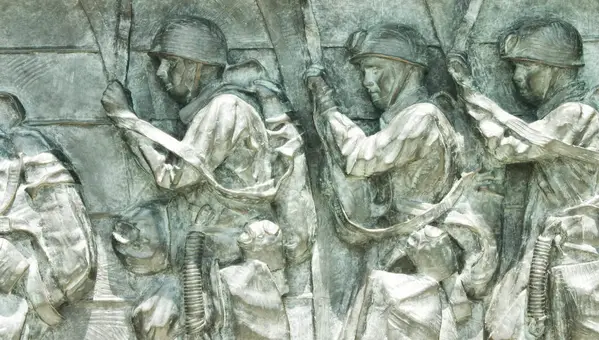
Veteran’s Guide to the Korean War Memorial
Lifestyle
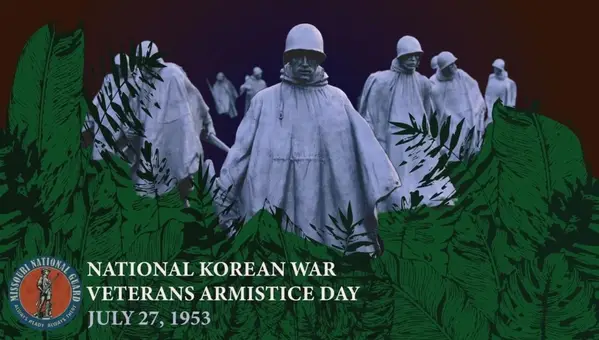
A Tribute to Korean War Veterans on Armistice Day
Military History
Join the Conversation

BY DANA CONGELOSI
Military Spouse and Contributing Writer at VeteranLife
Marine Corps Veteran
Dana is a military spouse who has spent more than five years navigating the unique rhythms of military life alongside her partner. She holds a Bachelor of Arts in History and Anthropology from St. Lawrence University and has built her career across museums, public libraries, and recreation. Thro...
Expertise
Dana is a military spouse who has spent more than five years navigating the unique rhythms of military life alongside her partner. She holds a Bachelor of Arts in History and Anthropology from St. Lawrence University and has built her career across museums, public libraries, and recreation. Thro...