The Full Story of the US Army Birthday: 1775 to Today

As our nation’s 250th birthday draws near, people all across the country look forward to celebrating this momentous anniversary of America’s birth. But as any true history nerd will tell you, though our country came into being on July 4th of 1776, some of its most iconic symbols, beliefs, and institutions originated before that hallowed day. Among them is arguably one of the most respected, successful, and trusted among those institutions: the United States Army.
Founded in the summer of 1775, the US Army observed its own 250th over a year before the nation’s. But as the country’s semiquincentennial approaches, let us take you through the origins of the Army that helped create it.
The Origins of the United States Army: Colonial Militias
While our nation’s Army traces its birth back to 1775, the history of American troops defending their homes and neighbors goes even further back than that.
Long before there was a United States Army, there were colonial militias. Back in the seventeenth and early eighteenth centuries, colonists in North America depended on units of local “citizen-soldiers” to help protect their towns and families. In towns and cities all across the original thirteen colonies, able-bodied men regularly trained and remained ready to serve when danger appeared, all while carrying out their everyday jobs and duties. They were farmers, shopkeepers, and tradesmen who stepped forward when needed and then returned to everyday life once the crisis passed.
Massachusetts was the first colony to add a degree of higher organization to this setup in the 1630s when it grouped its various militia companies into regiments. Other colonies soon followed suit.
Thus, by the time tensions with Great Britain began heating up into what would eventually become all-out war, the colonies had plenty of somewhat experienced men willing to serve, but no unified army. Turning those local companies and regiments into a single fighting force proved one of the biggest military changes of the Revolution.

The Creation of the Continental Army
The effort to create the unified force began in Philadelphia on June 14, 1775. After the Battles of Lexington and Concord, as troops of various New England militias began surrounding British forces near Boston, the Second Continental Congress decided to adopt those troops as a continental force and raise additional units from the rest of the colonies.
Essentially, Congress attempted to turn a hodgepodge of regional units into an army tasked with fighting on behalf of all the colonies. Thus, the Continental Army was born. The following day, Congress chose George Washington of Virginia, an experienced yet none-too-successful (at that point) military Veteran, to lead it as commander in chief.
Those two simple yet momentous decisions gave birth to the first truly all-American Army. But they did not end the problems facing the now united units. Washington took command of a force that was disorganized, short on supplies, and heavily dependent on short-term enlistments. Turning it into a reliable, professional fighting force took constant recruiting, training, restructuring, and negotiation with the states.
Even so, the Continental Army gave the Patriot cause something it didn’t have before: a national institution serving on behalf of the entire nascent nation. Numerous state militia units still retained their independence from central command but fought alongside the Continental Soldiers throughout America’s fight for independence. And, in a sense, the Army did not just defend a new nation. It helped bring that nation into being.
Continental Army Disbanded, US Army Founded
After the Treaty of Paris ended the Revolutionary War and secured American independence in 1783, most of the Continental Army was disbanded. The reason for doing so was partly financial, as the new nation was extremely short on money. But the decision to eliminate a standing military was an ideological one as well. Many Americans worried that maintaining an Army in peacetime could threaten the very liberty they had just fought for. After all, the outlawing of soldiers staying in citizens' homes was such a priority for the founders that it was the whole point of the Third Amendment of the Bill of Rights.
But before long, new threats to the young nation emerged as ongoing wars in Europe began threatening American citizens. It quickly became clear that some kind of regular Army was still necessary to defend the nation's newfound independence (and, far less admirably, to oversee its westward expansion at the brutal and bloody expense of the continent’s indigenous people).
Thus, in 1784, Congress created the First American Regiment, a formation of eight infantry companies and two batteries of artillery that constituted the first standing peacetime unit of what would soon become the Army of the United States. Thus, while the US Army justifiably traces its birth back to the 14th of June, 1775, the origin story of the oldest branch of America’s Armed Forces goes further back and years beyond that fateful summer day.
Continue Reading
The Union Army's Balloon Corps: “The Most Shot-At Men of the Civil War”
Military History
Infertility Diagnoses Are Spiking Among Veterans, But VA Benefits Remain Hard to Navigate
Veteran Benefits
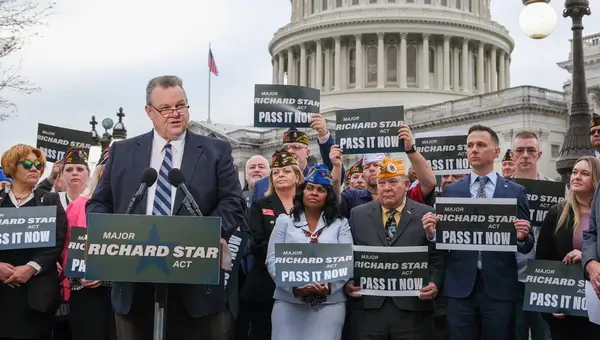
Major Richard Star Act Hits 218 Signatures. Here’s What Happens Next for Combat-Injured Veterans
Veteran Benefits
Join the Conversation

BY PAUL MOONEY
Veteran & Military Affairs Correspondent at VeteranLife
Marine Veteran
Paul D. Mooney is an award-winning writer, filmmaker, and former Marine Corps officer (2008–2012). He brings a unique perspective to military reporting, combining firsthand service experience with expertise in storytelling and communications. With degrees from Boston University, Sarah Lawrence Coll...
Credentials
Expertise
Paul D. Mooney is an award-winning writer, filmmaker, and former Marine Corps officer (2008–2012). He brings a unique perspective to military reporting, combining firsthand service experience with expertise in storytelling and communications. With degrees from Boston University, Sarah Lawrence Coll...